Showing posts with label Michigan. Show all posts

Saturday, February 6, 2016

West Virginia about to fall to "Right to Work"

It looks like West Virginia's new Republican majority is about ram through a Right-to-Work (for less) bill.

It's not a surprise, that's what GOP majorities always do with anti-labor legislation. (See Wisconsin, Michigan, Indiana, and Michigan, oh, and Michigan again.) Once these bills surface, they rocket through the ledge to stop opposition and minimize the public discomfort their backers have to face.

West Virginia's legislative majority could use a visit
from these nice ladies.
In West Virginia, they're drawing on Orwellian inspiration to call it the "Workplace Freedom Act" Guh. Like all (so-called) Right to Work laws, it would give employees the right to stop paying dues to the labor union that represents them, but forces those unions to continue to represent the workers. The goal is to defund the unions, leaving workers out in the cold.

I've always been of the belief that if workers don't want to work in a union shop, they should quit and find an employer without a union. I mean, that's what management tells employees when they demand healthcare or higher wages or better working conditions, right?

Anyhow, back to West Virginia.

Proponents, backed by the usual third-rate think tanks, push the usual bad arguments about RTW improving West Virginia's economic prospects (because gutting workers' rights always improves things for residents). And anti-labor legislation debates always come with a few gratuitous shots at pro-labor protesters .

It was only a matter of time. I thought the GOP would wait until they elected one of their own as governor,  but the state's weak gubernatorial veto (simple majorities of the legislature can override as long as the legislature is in session) made it too tempting to not get done this year.

Kentucky is likely next up, with Missouri, New Mexico, Montana and Ohio potentially on the chopping block depending on how 2016 elections go.

Yes, I am depressed about this.  I'm doubly so because the battles in West Virginia's coal fields rocketed the United National Mine Workers to prominence. But the group has lost more than 90 percent of its membership in the last half century as coal-mining has died and the remaining operators rely on cheap bankruptcy tricks to undercut the few union minors left.

John Cole over at Balloon Juice has more on this and the other predictable horribleness that results when you let vandals take over your state legislature (like apparently now $100 for a five-year gun permit is an unconstitutional infringement on your right to pack heat).


Monday, January 4, 2016

Labor's prospects over the next several years look alarming

As another election year dawns, I find myself contemplating the future of the labor movement.

The immediate future looks grim.

That isn't to say that the labor movement is going to die, or that unions won't continue to play a role or help working people. And it certainly doesn't mean that activists should stop fighting for the rights of working people everywhere.

However,  it's much more likely than not that the labor movement is going to suffer some serious hammer blows in 2016 and the remaining years of the decade.

I'll focus narrowly in this post on the spread of (so-called) Right to Work (for less) laws (RTW).

RTW is an insidious concept that cloaks itself in righteous language to divide workers and drastically weaken the power of their organizations.  By the National Labor Relations Act and the state statutes that govern collective bargaining for state and local public employees, unions have to represent all employees in a bargaining unit.  In 25 states, the union has the ability to bargain to charge fair-share fees of all member of the unit, which represent the costs of collective bargaining.  Full dues, which represent political activities engaged in by the union, are only paid by individuals who want to be members who in turn have rights to vote and participate in the governance of the union.

In an aside, remember that in order to represent workers, unions have to win an election to become the bargaining agent, and they are controlled by the members through democratically elected officers. Finally, they can be decertified if a majority of workers vote in an election to remove or replace the union. This is a fact glossed by anti-worker forces.

What RTW laws do is allow workers to free ride of the union's efforts by banning fair share fees. The corporate-backed groups and think tanks pushing RTW argue that workers have a right to not join a union (though they are rather silent on a worker's right to join a union). Of course, though banning fair-share fees, RTW laws still compel a union to represent any one in a bargaining unit. As a result, we create a free-rider problem described by Mancur Olson: why should you pay for something you can get for free?

RTW is insidious because it only appears to cripple a small part of collective bargaining rights: in itself, it doesn't touch the ability to bargain for better wages or working conditions. But by undermining the union finances, it cripples the ability of a union to organize, bargain and protect strong contracts, which can lead to fewer members, which leads to further financial erosion. At worst, a death spiral happens, leaving a bunch of isolated, cynical workers in its wake -- who then can be easily exploited by unfettered bosses.

Currently 25 states have RTW laws, and 25 do not. Since 2011, when Scott Walker eviscerated public sector unions in Wisconsin, three states have jumped on the RTW bandwagon: Indiana, Wisconsin and Michigan.  From a worker's perspective this should be alarming, because all three of these states are in the industrial Midwest, which traditionally has a strong union presence. Michigan was the birthplace of the United Auto Workers (UAW), whereas the Association of State, County and Municipal Employees (ASCME) originally formed in Wisconsin.

As the parties have polarized and the remaining labor-friendly Republicans retire or are overwhelmed by their conservative colleagues, this momentum is likely to continue.

Extreme Risk:

West Virginia: I suspect it's pretty much all over in West Virginia. Like many Appalachian states over the last several election cycles, the legislature has become sharply more conservative, with the GOP breaking the dam in the 2014 elections. A RTW bill was shelved in 2015, but with GOP gains likely in both houses of the legislature and a Republican taking over the governor's chair very likely in 2016, in 2017, RTW's arrival will be a given.

Kentucky:  A slimmer and slimmer Democratic majority in the state House of Representatives is the only thing standing between RTW and Kentucky. The extreme conservative Matt Bevin's win as governor jumps this state from medium risk to extreme risk, as anti-labor policies are core to Bevin's identity -- in two of his first executive orders, he discarded higher minimum wage requirements for state agencies and issued a hiring freeze in filling unstaffed positions.

The Democrats may hang on to their house majority in 2016, since they were somehow able to cling to it in the low-turnout year of 2014.  However, the off-year election of 2018 is another animal entirely.

Several Kentucky counties have already tried to issue RTW laws on their own; these efforts are currently tied up in court, but the winds are very much blowing the wrong way for labor rights in this state.

High Risk:

Missouri:  Democratic Governor Jay Nixon vetoed a RTW bill in 2015 and the Democrats backed by a few nervous Republicans have managed to sustain those vetoes in the legislature, despite the GOP maintaining a supermajority in both chambers. Unlike West Virginia, the Democrats have a fighting chance in the governor's race in 2016, despite Missouri drifting further into the GOP orbit over the last decade. With a Democratic win in the governor's race, Missouri is likely safe for another four to eight years. With a GOP victory, RTW would likely be the very first thing on the government's agenda in 2017.

Medium Risk:

Ohio: With Republicans in strong command of both houses of the state legislature and the governorship for the foreseeable future and likely maintaining the governorship, Ohio would seem to be a likely candidate for a RTW bill -- and one is currently percolating in the legislature.

However, Ohio Republicans have a bitter memory of the last time they tried to push a major anti-worker bill through the legislature holding them back. In 2011,  Ohio Republicans pushed a Wisconsin-style bill designed to strip most collective bargaining rights from public employees. The bill passed, but  Labor and progressive groups gathered more than a million signatures to force a referendum, in which 62 percent of voters rejected the bill

That memory may be holding the GOP in check for now, but if other states continue to push through anti-labor laws, Ohio Republicans will likely eventually press forward.

Possible risk

Montana:  Montana's state legislature has been in solidly Republican hands since 2010, but Democrats have held the governor's chair. Incumbent Steve Bullock is in a reasonably strong position for the blue team, so hanging on to labor rights for at least four more years appears possible in this traditional mining state.

New Mexico: New Mexico currently has Democrats in control of the State Senate, but lost control of the House of Representatives in 2014.  Presidential year turnout will help protect the Democratic senate advantage in 2016 and perhaps help them retake the house.  But if Democratic power in the legislature erodes further, anti-labor legislation will be on the agenda when a Republican is governor.

New Hampshire and Pennsylvania might also be at risk. The Granite state occasionally gets massive GOP majorities in the two houses of its legislature, as it did after 2010. In that case a few moderate Republicans helped the Democrats in the house sustain Democratic governor John Lynch's veto of a RTW bill in the 2011-12 session. As long as the Democrats hold the governor's chair, they should be OK here, but elections are close and there is an open seat in 2016.  Pennsylvania is safe as long as Democrat Tom Wolf, elected in 2014 is in office, but the GOP has a built-in advantage in the state house and its majorities are becoming dominated more and more by extremely conservative ideologues.  Protecting Wolf in 2018 and drawing better districts in 2020 will be key to keeping the Keystone state working people from getting their collective bargaining rights curtailed.

The Supreme Court

This list doesn't count the worst probable hammer blow that's going to fall on labor this year. That would be Friedrichs vs. The California Teacher's Association, which has made its way to the Supreme Court a case set for oral arguments on January 11. The case will likely result in a 5-4 decision -- authored by Sam Alito--  overturning nearly four decades of precedent and invalidating fair share fees for all public sector unions on the specious grounds that collective bargaining with the government is a form lobbying (political speech), which cannot be compelled. Of  course, the union will continue to have to represent the interests of all of its members without their financial support, but I guess speech rights for dues payers aren't as important.

I so do weary of Alito's conception of Freedom of Speech in which it becomes much easier for wealthy owners to speak (see Citizens United) and much more difficult for working class people to organize so they can speak.

Again, we shouldn't despair from the likely reverses that are coming. The movement goes on and labor will continue that struggle. However, we should be aware that the struggle is likely going to become more difficult, though if we can win a few important elections -- we can blunt some of the blows.

And remember, that the only way to overcome RTW both legislatively and on the ground is to organize.

Solidarity.

Tuesday, November 24, 2015

Union contracts, what are they good for?

Last week, Erik Loomis posted a summary of an article about the ongoing pilots' union negotiations with Southwest.  Loomis' point (and the excellent article he links to) are that union negotiations are about more than money -- they are also about the conditions under which employees work.  In this case, pilots voted down a proposed contract that offered them a large raise in part because Southwest demanded far more flexibility on duty hours to match other airlines  (which had managed to force those concessions from bankruptcy judges).

With the constant refrain we hear about unions being all about grabbing money, this idea of the employment environment is extremely important. I would also add that rules about firing and hiring are very important as well. My old union at the University of Michigan just settled (and essentially won) a grievance filed by a Graduate Student Instructor named Alex Chen who was offered and accepted a job in the bargaining unit, before having that offer yanked by her supervisor for spurious reasons. 

Of course, Chen lost her health insurance and tuition waiver in addition to her salary. This situation is deadly to a graduate student, who probably would have to drop out of school facing a tuition bill of more than $10,000. I've known several students in situations like this; and the psychological stress they face is extreme.

Chen reached out to the union and found out that not only did contract language back her position, but that she also scores of fellow members willing to protest on her behalf.  That article, which details what happened in the meeting, contains several fabulous anecdotes about a department program chair behaving like a stubborn child who has been caught lying about doing her homework.

An interview with Chen outlining her particular situation is here.

Anyhow, I highly recommend Loomis' post -- and the excellent comment thread, which features a really good discussion of the nuts and bolts of work rules in a contract led by a freight pilot (Major Kong) who is often found in the comment threads of progressive blogs. The thread is doubly worthwhile because it brings in information from the union and not just from Southwest, as well as discussing how issues like codeshare and subcontracts with regional airlines can undercut airline unions.

And remember -- work rules and hiring practices are just as important as wages.

Sunday, March 8, 2015

Obamacare is about People, not States


On January 30, Ezra Klein posted an insightful Vox piece about one of the great ironies of the Affordable Care Act.  After a lot of thought of my own, however, I don’t think it’s much of an irony at all. 

Klein’s analysis noted that the original ACA – supported heavily by Democrats – featured a massive redistribution of wealth from Blue States to Red States.  The people helped by Obamacare’s Medicaid expansion and exchange subsidies were disproportionately concentrated in the states of the ex-Confederacy that had low-wage economies with skimpy existing Medicaid programs. (An old joke in Mississippi claims that you have to be legally dead to qualify).

The irony that Klein points out has been that Republicans are fighting tooth and nail to turn the ACA into a program that drains money from Red states and transfers it to Blue States. When the Supreme Court held that the Medicaid Expansion had to be optional for states, many states dominated by Republicans declined the expansion while Blue States snapped it up, shifting the benefits flow from Red States to Blue States If the Supremes decide the case of King vs. Burwell in favor of the forces of darkness, it will declare subsidies on exchange marketplaces illegal – but only in the states on the federal exchange, which of course are disproportionately Red States. As a result, higher earners in Texas will be sending their increased Medicare taxes to poor and working-class people in states like New York and California while their own states lose out.

It’s an interesting puzzle, but I think it can be explained quite easily – at least on the liberal side of the equation – by changing our unit of analysis. Klein looks at states, but I think it makes more sense to look at people to explain this paradox. On some issues, perhaps it makes sense to look at issues as state vs. state.  If a major manufacturer decides to leave one state and move to a second, for example then pretty clearly the second state is better off relative to the first. Politicians will act accordingly and line up state against state.  

But the motivating purpose behind the Affordable Care Act wasn’t about New York vs. Texas, it was about 48 million people in the United States who didn’t have health insurance. Ohio Senator Sherrod Brown didn’t refuse to take federal health insurance because Florida got more Medicaid dollars than Ohio, but rather in solidarity with millions of Floridians and Ohioans who didn’t have access to health care at all. If Mississippi took $14.5 billion in federal money over the next decade to expand Medicaid, I wouldn’t be mad that that money wasn’t going to Pennsylvania, my latest state of residence; I’d be celebrating because 169,000 of my fellow citizens got access to health care.

On the flip side, the logic is perhaps more difficult to explain for a Red State GOP governor like Rick Perry or Mississippi’s Phil Bryant. There’s the potential that they just don’t understand it. Perry recently suggested that millions of Texans liked not having insurance, which may represent a weak dodge or actual ignorance of reality. But there’s also the possibility it’s about people for them too – specifically “those people” who are poor and likely have a darker hue of skin and are viewed as undeserving of federal benefits. Politicians used to be able to wrangle earmarks and pork for their state , which reduces the role of ideology, but ideological sorting and polarization has been getting stronger over the last 40 years. As a result, politicians who rely on bringing home federal dollars to get votes find themselves facing tough primaries – like the one Thad Cochran barely survived in Mississippi in 2014.

We can solve Klein’s puzzle then by re-imagining the pieces. It’ not about cash flows to states, it’s about people – and whether a state official’s ideological blinkers permit those without access to health care to be seen as human beings deserving of compassion or dignity.

Friday, May 30, 2014

Grassroots push leads to negotiated minimum wage hike in Michigan


The dust has cleared on a brouhaha surrounding a proposed minimum wage hike in Michigan.

The good guys (mostly) won – thanks to grassroots organizing, massive public pressure and some skilled negotiating behind closed doors. It was an incomplete victory, but it was a victory all the same – most low-wage workers in Michigan are getting a 25 percent pay increase over the next four years to $9.25.

The story starts at Raise Michigan, a grassroots organization that put together a petition drive in February to put a proposal before the legislature to amend the minimum wage to raise the wage. If the legislature didn’t pass it, it would go before voters in November.  It’s a similar gambit that anti-choice organizations used to circumvent Gov. Rick Snyder’s veto of legislation that excluded abortion coverage from Michigan’s health insurance exchange last summer.

The idea was to raise the wage for most workers from $7.40 to $10.10 an hour over three years from, 2015 to 2017, and then index future increases to inflation. As importantly, the petition would also raise the minimum of tipped workers from the current unconscionable $2.65 an hour by 85 cents a year until it reached parity with the rest of the work force. 

Of course, the usual suspects in business and the restaurant industry cried bloody murder about how giving low wage workers a raise to non-poverty income levels would wreck the economy.  But the legislature’s Republican majority was in a pickle – if they defeated the measure in the ledge, then it would go on the ballot – where minimum wage increases tend to fare quite well.
In response, Senate majority leader Randy Richardville (the dude who drove me to blog in the first place) reasoned that if the minimum wage law was repealed, then technically an initiative amending the law would be out of order.
Follow me below the fold for how that particular evil gambit actually turned into a productive set of negotiations and a legislative victory.

Friday, November 22, 2013

Medicaid expansion: Who's next?

Right now, we're all breathlessly watching the Healthcare.gov to see if glitches are getting fixed and people are signing up,  but let's pause from that briefly today and look down the road a bit.

One of the biggest immediate holes in the Affordable Care Act opened up when the Supreme Court ruled that states didn't have to expand Medicaid in order to keep their current federal support. Getting more vulnerable people under the poverty line access to health insurance needs to be  a major priority over the next several years. So which states might can we most effectively organize in to push Medicaid expansion?

Currently, 25 states have embraced the expansion, while 25 are still debating the issue or have rejected the expansion for now. (Three days ago, Alaska became the most recent state to announce that it wouldn't be taking the money).

But just because they say "no" today doesn't mean they'll say "no" tomorrow. As Kaiser Foundation research points out, offering lots of federal money to states eventually got nearly every state to deploy some sort of Medicaid program in the 1960s and 1970s and some sort of CHIP programs (children's health insurance) in the late 1990s.

Oddly enough, the Medicaid expansion of the ACA is getting adopted at almost the exact same pace that the original Medicaid was adopted. After one year of available matching funds in 1966, 26 states had opted into the program. A month before the expansion under the ACA goes live, 26 states are at least tentatively (and mostly firmly) in the expansion camp.

The similarities may end there, as Republican intransigence across a wide swath of the South and West will likely block expansion for the foreseeable future. However, even in some GOP-dominated states like Arizona and North Dakota, the expansion has been adopted, so this provision is not absolute.

More immediately though, there are several very ripe target states activists should focus on for immediate results. I list these below with how many uninsured people would be covered under Medicaid expansion (numbers again courtesy of Kaiser), in rough order of degree of difficulty of passing an expansion over the next two years.

Tuesday, November 5, 2013

The Costs of Voting: or "I blew it again" or "Who the heck is running for this office?"

Here's another installment in my ongoing series about the costs of voting.

So it's an off-year election here in Texas, which means local elections and statewide constitutional amendments.

For the most part, I didn't have a problem. I took about an hour to research the nine different state constitutional amendments. A few required some thought, but most were no-brainers.  The mayor's race in town was an easy choice, especially after Ben Hall decided to come out against policies that would start treating gays and lesbians like human beings.

That was probably another hour of research.

There were no school board seats up in my district, the two local bond issues were well covered and my local City Councilwoman was unopposed. 

That's another hour, but still so far so good.

And then I got to the five at-large council seats.With interviews from sites like Texpatriate, and Kuffner's, as well as candidate web sites, I was able to get enough information to make a semi-informed choice on four of five. For one, a good working relationship with Annise Parker made the decision, on another a good interview on planning issues put me over the top. For another, seeing a list of accomplishments on his Web site leaned me in his direction, while for a fourth candidate earned my vote because a local progressive had volunteered for her campaign.

This was about two hours of research.

But I STILL couldn't figure out who I wanted in one of the races.

You see, there's always one electoral race that I have no clue is coming or overlook. In Ann Arbor, it was always the local library board. There always seemed to be four people running for three slots.  Three of the candidates were usually nice, upstanding, stewards of the community -- and the fourth was a raging lunatic. The problem was that I could never suss out the lunatic and information was usually thin on the ground.

And so I -- a guy who has either covered or studied politics for a living for the past 15 years -- still have not filled out a complete November ballot in my life.

Also, even after five hours of research,  note how many of my choices were made by cues and vague impressions and not necessarily carefully considered information.

The costs of voting are real -- and that's even without my having any problems with ID, or having to wait in line at my conveniently located rich-neighborhood well-run polling place.

Thursday, October 31, 2013

Texas needs an income tax

So Republican candidate for Governor Greg Abbott recently accused Democratic candidate Wendy Davis of wanting to raise Texans' taxes by $35 billion.

Ho hum.

Politifact then suggested that Abbott was full of it.

What else is new?

What Davis suggested that she wanted to do was put together a board of state officials to examine exemptions from current state taxes to see if they were still warranted, most notably the gas tax and the sales tax.  She said she she didn't want to raise current tax rates, but wanted to especially examine the $36 billion in sales tax exemptions.

This is good policy, and I'm supportive of the review (particularly of a several odd-looking exemptions, like those surrounding aircraft....)

But when it comes to taxes, I (as a naive carpetbagging Yankee) would like to see Texas adopt a personal income tax; it's currently one of nine states without one. That might be political suicide for Davis right now, so I don't blame her for not bringing it up. Over the long-term, however implementing an income tax will diversify and stabilize state revenues while redistributing the tax burden to the upper class and away from more vulnerable state residents.

Take the jump for more details.....

Sunday, October 27, 2013

Texas Adjustments Part V

So, now we're down to the local level.

I traded in Mayor John Hietfje of Ann Arbor:


And picked up Annise Parker:

 
Both are interesting. Hietfje may have overstayed his welcome in Ann Arbor, where he was first elected mayor in 2001. I was frustrated with how he treated city employee unions from time to time, as well as some of his budget-cutting moves toward fire and police protection. On the other hand, I was generally pleased with his environmental and transportation initiatives. The central city, which was already a nice place to live, continued to become much more walkable during my time there under his tenure in City Hall. Some (though not all) of the complaints against him were the result of clubby Ann Arbor townie stuffed shirts who had no clue about urban planning or development. And frankly, the opposition candidates who ran against him were absolutely laughable.

Parker is something of a liberal lion in southeast Texas, though a quietly pragmatic one. Houston is light years behind Ann Arbor in sustainability and livability, but Parker has hired a cracker jack sustainability director from San Fransisco, installed and expanded bike share, gotten curbside recycling off the ground, cleaned up a mess at Metro, worked with the county to improve parks, presided over the expansion of light rail and generally kept the metaphorical trains running on time.

I suspect she would make an excellent state comptroller (her old job in Houston) if Democrats can ever win a state-wide election again.

I'll give the edge here to Texas, just because of Parker's shiny (at least to a new resident) sheen.

I skipped over the state legislature as well -- I trade State Sen. Rebekah  Warren and Rep. Jeff Irwin, both solid progressive Dems (and lovely people) for State Sen. John Whitmere and Rep. Garent F. Colman, who seem at first glance to be quite adequate. Time will tell.

Enough with politics -- future installments will include really important things, like food. Texas should be able to do better here than in the political section.

Tuesday, October 22, 2013

State aid and college tuition costs

So I have a new article up at Thesis Web magazine.

The general conclusion is that cutting state aid for higher ed leads to large tuition hikes.

I know this is shocking to many state legislators.

Sunday, October 20, 2013

Texas Adjustments Part IV

Enough with the federal delegations, time to head to the State level.

When I fled south, I got to leave Rick "Governor Nerd" Snyder, Michigan's CEO:


And when I crossed the border at Texarkana, I inherited Rick "Governor Hair" Perry, Texas' CEO.


Ugh. Both men are complete Richards who go by Rick. They are also both obscenely Rich. And, not incidentally, they both have acted like complete Dicks during their terms in office.

I'm thankful Snyder actually understood the need to expand Medicaid in Michigan -- and pushed for it. But I will never, ever, ever forgive Snyder for signing "Right-to-Work" legislation in Michigan. End of story -- the man is dead to me.

Perry, well, there's not enough space here to talk about him. From the death penalty, to guns, to threatening the Chairman of the Federal Reserve, to showing zero compassion and intelligence with regard to health reform, to his stupid secession talk; I sure hope the door smacks his butt hard on his way out in January, 2015. Of course, we're probably going to get some one even worse, so... sigh.

Anyhow, this one is a push -- preferably off a cliff, Thelma-and-Louise-style. Now if you'll excuse me, I need to read a few Molly Ivins columns with a stiff drink nearby.

Sunday, October 13, 2013

Texas Adjustments Part III

So let's move to the House of Representatives.

From my old Ann Arbor district, we have John Dingell:


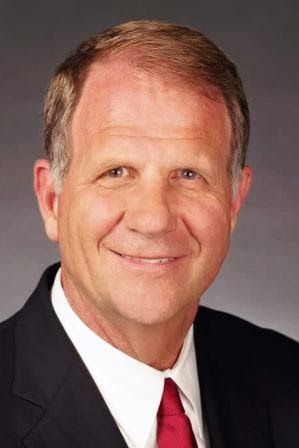
In my new west Houston district, we have Ted Poe.


According to Project VoteSmart, Poe actually received a voting score of above 20 percent from the SEIU on several occasions in the last decade. He also took a recent surprising, yet gratifying stance taken in favor of getting federal funds for the University Light Rail line. Of course, on everything else, he's terrible, but those two facts alone make him Nelson Rockefeller by the usually Neanderthal standards of the Texas House delegation.

But still, Dingell is the real deal -- His dad was an original New Dealer and Dingell has been voting like one ever since, supporting Medicare, Medicaid, worker safety, unemployment insurance, higher minimum wages. He's introduced a universal health care bill on the House floor on the first day of every session he's been in Congress. Some of his stances on guns and the environment weren't perfect, but he's swung quite a bit on greenhouse gas regulation over the last decade. He's also remarkably coherent and thoughtful for a man who's 87 years old -- he might be a bit frail physically but the brain is still working hard.  Advantage, Michigan.

Friday, October 11, 2013

More on Exchange competitiveness

Aaron Carroll over at the Incidental Economist has a blog post up of his own comparisons between the Indiana University's Health Insurance Offerings and the Indiana exchanges. His investigative tactics are a bit different than mine were in my last post, but we come to similar (cautious) conclusions: the exchange plans are very competitive on price and services with their employer-offered counterparts.

This is really, really good news for Obamacare.

Sunday, October 6, 2013

Texas Adjustments Part II

Round II:  U.S. Senate

So I've gone from this guy, Carl Levin:


To this guy, John Cornyn:


On a raw sex appeal scale of 1-10 we go from about a -4 to a 3.2, so that's something. I guess.

But Levin's legendary comb over and school-librarian reading glasses have a certain so-bad-they're-totally-awesome charm to them.

And three months of listening to Cornyn spout absurdities during Senate Finance Committee hearings on health-care reform make this choice clear. Michigan takes round II.